1. King (2010) describes Horror as being defined through three basic elements. Explain, using references, what these three elements are. Think of a horror story you’ve read/watched/heard that makes use of all three of these elements and show how King’s definition is at play in that narrative.
According to King (2010), there are some who think fear is of no value other than simply stimulating human peripheral nerves, while others who like and enjoy horror genres may be considered abnormal. Horror speaks bluntly of symbolic things that we fear to talk about, and thus, through books or movies, we indirectly contact these elements and use them as a tool to infinitely unfold the world of our imagination which previously may have been closed. He states that Horror is a useful being that gives us the opportunity to exercise the emotions they continuously demand.
“Monstrosity fascinates us because it appeals to the conservative Republican in a three-piece suit who resides within all of us. We love and need the concept of monstrosity because it is a reaffirmation of the order we all crave as human beings…and let me further suggest that it is not the physical or mental aberration in itself which horrifies us, but rather the lack of order which these aberrations seem to imply.” (Danse Macabre, 1981 p.50)
The research on fear is vast. According to psychologist James Gere’s Fear Survey Schedule, what people are afraid of is “war, snakes, futures, test failures, presentations in front of people, crimes…..” The reason we feel fear stems from a particular memory of an individual or a natural desire to avoid pain, distress, or suffering instinctively. However, unlike the fear of certain events with obvious risk factors, such as the fear of heights which can be described as logical as it is in human nature to fear falling and being hurt. While we sometimes feel that something is difficult to explain and ‘creepy’ although it is not scary, which is often things such as the paranormal or supernatural.
Horror novelist Stephen King classified these horrors into three categories. Specifically things classified as a subgenre of horror and refers to psychological horror.

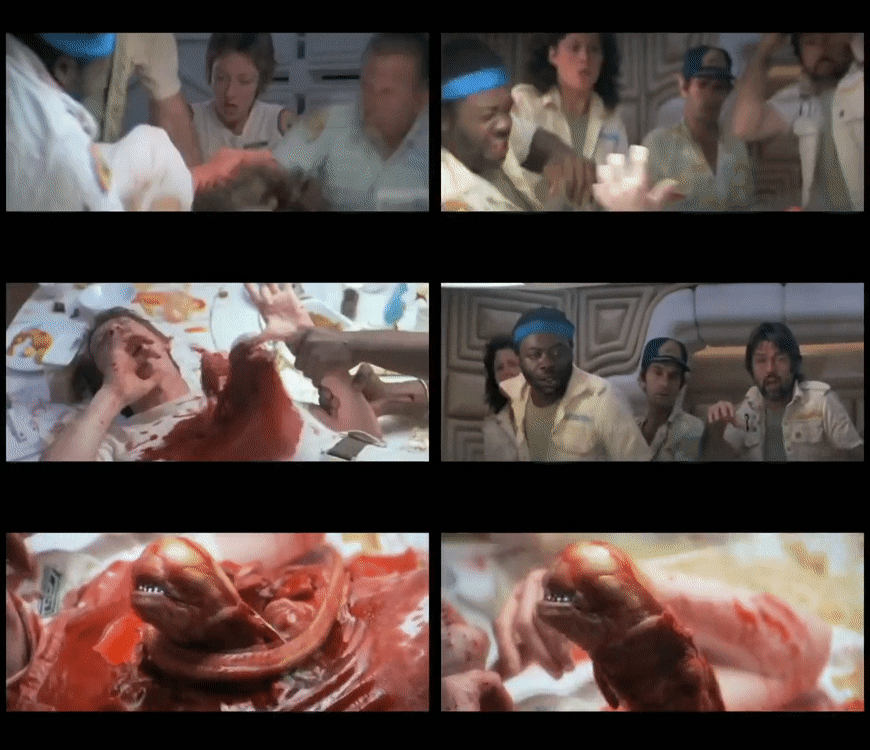
The first category is ‘Revulsion’ (Gross-out), an emotion linked to the instinctive feeling of disgust toward an occurrence that may be considered unsanitary or unnatural to the highest degree. It could be a scene in which pus or mucus is exposed in sometype of living creature, or fungi that covers the whole body. For myself, the most memorable scene in my head is the birth scene in “Alien”.

Secondly is ‘Horror’. Horror refers to huge events that humans do not usually experience and have little to absolute no power over. Examples of this can be the Cthulhu myth, or an apocalyptic event such as a Zombie epidemic or a Nuclear war.
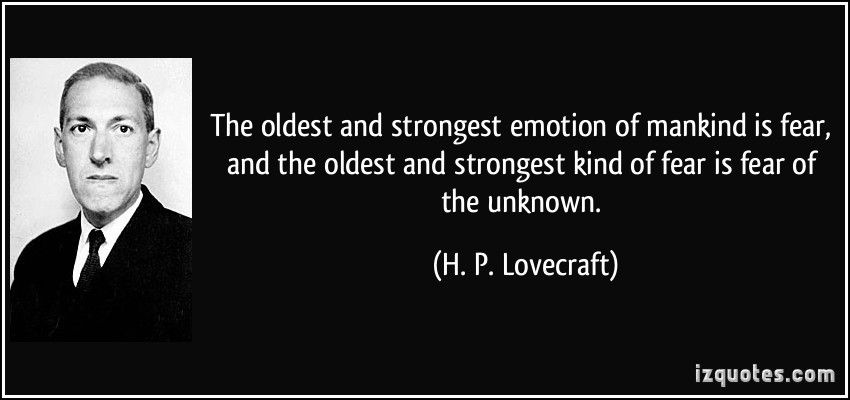
Third and finally there is ‘Terror’. King(2010) said Terror is the most sophisticated horror, which refers to an unpleasant feeling in situations where we don’t know if you are safe or unsafe. Often this comes from a lack of understanding about the situation one might be in along with little knowledge as to deal with a certain situation.

So then where do we draw the lines between these ambiguities and uncertainties?
Obviously, it can’t specifically be called dangerous due to our lack of knowledge during such a situation, but when it comes to dealing with something that is not inherently safe or unsafe, our human brain becomes confused in judging its level of harm, which in turn leads to an unpleasant and creepy emotion.

The best examples of uncertainty are the clowns and wearable masks that many fear. Since the mask temporarily hides the face that reveals human emotions and intentions, it has the effect of isolating the object from the most basic social communication. In other words, because it blocks the primary basis for judging whether there is any expression under the mask or whether it is a harmful person or not, the ambiguity of the object is amplified, and confusion and fear of the unknown as well as uncertainty is expressed. In King’s work, Terror brings fear to the audience by using mental factors such as guilt, trauma, doubt, and paranoia of the protagonist. Also, it has the characteristic which many symbols that indirectly show the psychological state of the protagonist appear throughout the work.
This film best expresses the gloomy and terrorist atmosphere of <Pet Sematary 2019>.
Reference
Stephen King’s 3 Levels of Horror. Regal Reel. (2019, August 27). https://www.regmovies.com/static/en/us/blog/stephen-king-3-levels-of-horror.
Wikimedia Foundation. (2020, September). Pet Sematary. Wikipedia. https://en.wikipedia.org/wiki/Pet_Sematary.
King, S. (1981). Danse Macabre.
Vsauce. (2013). Why Are Things Creepy?. https://www.youtube.com/watch?v=PEikGKDVsCc






 Pop Genres 2020