What is the ‘Shōjo’ and how does it often function in anime?
Shōjo in Japanese means ‘little girl’ it is also a type genre in anime and manga which focuses on romantic relationships and personal ones Shōjo mainly has a target audience of young girls because of how much it romanticizes a young girls life. Shōjo rose to popularity in the late 90s it is seen to have this stigma of female pureness, virginity, vulnerability, romanticism and nostalgia” (Berndt, Nagaiki, Ogi, 2019). Which means that Shōjo characters can be sexualized, unlike the male protagonists which are shown to be protective dominant and masculine males which are shown to be idealized in for the younger girls in Shōjo anime.
Shōjo has evolved throughout the year’s directors such as, Hayao Miyazaki who is a famous anime director who created anime movies such as ‘Spirited Away (2001)’, My Neighbor TOTORO (1988) and Princess Mononoke (1997) proves that Shōjo can be more than just romanticism and fragile girls that need to be protected by boy/men his work portrays girls as being strong independent protagonists that don’t need protection. His work admired and appreciated because of the themes of environmentalism, pacifism, family, love and feminism for example in his anime film ‘Princess Mononoke’ all of these themes can be seen through the character Ashitaka who does not intend on going to war against humankind and believes in peace much like another anime he directed Nausicaä of the Valley of the Winds (1984) where the character Nausicaä also possess the same pacifism and many other qualities as Ashitaka making the themes consistent with Miyazaki’s work. Miyazaki’s work is seen to empower women to be self- efficient and not having the need to have a saviour which makes his work different according to Cavallaro (2006) said that “while the average shōjo is portrayed as a passive being suspended in something of a timeless dreamland”. Which means that directors such as Hayao Miyazaki have their own interpretation of Shōjo and how they convey it to their target audience and it isn’t necessary to coney Shōjo to be sexualised or romanticized but can also be shown Shōjo to empower girls/women that can fend for themselves making Shōjo an important part of anime function.
References:
Mountfort, P. (2020). Pop genres week 5 anime 2 part 1 [PowerPoint Slides]. Blackboard. https://blackboard.aut.ac.nz/
Cavallaro, D. (2006). Introduction. In the Anime Art of Hayao Miyazaki (pp.5-13). London: McFarland & Company.
Cyberpunk is a combination of Cybernetics and Punk. In terms of the artistic creation of film and television entertainment; it is a branch of science fiction stories based on information technology with a combination of low-life and high tech. The animation Akira is fully conformed to the features of cyberpunk, including cyberspace, cybernetics, urban expansion and ghetto, mega enterprise, human augmentation, genetic engineering, terrorism and anti-hero as seem from the Cyberpunk documentary(Indigo Game, 2019). The only difference is the combination with Japanese-style cultural relics in the background (Suzuki & Shunzo, 1988).
From the appearance of the Neo-Tokyo represent high-tech dark city as there are many futuristic high-rise buildings, and there are also many Japanese-style buildings such as restaurants, temples and other signs with Japanese language characters on the streets under the overwhelming high-rise buildings, the dazzling lights and the gloomy scenery (Suzuki & Shunzo, 1988).
Social chaos in the story have become incurable; violent incidents like drag racing, explosion and destruction, and anti-government activities such as protest movement and demonstrations. The school has become a gathering place for degraded ethnic groups; students do not study, and the faculty teachers are helpless. The high-level government is even more corrupt, intrigue, and only for their interests, regardless of whether they live or die (Suzuki & Shunzo, 1988).
In terms of technology, buildings are similar to robotic styles, including vehicles, networks, digital spaces, mechanical pipelines, and complex electrical circuits are all-important technological elements. For example, the low-floating vehicles, high-tech surgical laboratory which transformed Tetsuo into Akira like superpower, and the coverage of high-tech underground base (Suzuki & Shunzo, 1988).
In terms of human nature, Akira showed the evil thoughts, hatred and greed of humans; it also explained that power is like money; once you got it, you will want more. For example, when Tetsuo has achieved superpower, he changed from a weakling to a madness killer and slaughtered those who got his way from achieving Akira’s power, including his friend Kaneda who used to look down on Tetsuo (Suzuki & Shunzo, 1988).
Part 2: How does it reference the wider subgenre:
Akira is undoubtedly the most successful Japanese animation in the Western market. While producing Akira, Katsuhiro Otomo also referred to the film and television works from various parties. Afterward, Akira has also become the inspiration for cyberpunk entertainment works. In other words, Akira and Western film and television inspire each other. As for which subgenres Akira referred, Otomo has combined his life experiences, including people and things, and the early robotic animations and the Hollywood movies he saw into a world, which is the Neo Tokyo in Akira.
First; the Neo-Tokyo in Akira derived from what Otomo saw and heard on the streets of Tokyo in the 60s and 70s, including the post of World War II, the Tokyo Olympics in 1964, and the security struggle in the 70s has become the corrupt elements shown in cyberpunk. For instance, Katsuhiro came to Tokyo after graduating from high school, witnessed the drastic changes that Tokyo was going through before and after the 1964 Tokyo Olympics, he then saw student demonstrations, cyclists, political movements, gangs, and homeless teenagers (Kodansha Comics, 2019).
Second; two early Japanese animes inspired Otomo, one is from Yokoyama Koki’s Iron Man no.28, and the other is Osamu Tezuka’s Astro Boy, both are about the abuse of technology in wars and peace (Fuller, 2020). In short, these two works have inspired Katsuhiro in character and story setting. For example, the two protagonists, “Kaneda Shotaro” and “Shima Tetsuo” are named after Iron Man 28. In the story of “No. 28”, Shintaro Kaneda is the protagonist who is the pilot of no.28 robot, and Tetsuo is taken from the scientist Dr Shikishima Tetsuo. Furthermore, the number 28 in Akira’s hand is the tribute message to the glory of Yokoyama’s Iron Man no.28 (Barber, 2017). As for the prototype setting of Akira, it was inspired by a character from the version of Tezuka’s Journey to the West Xiaolong, who poses deep, crying and sad expression, so he used this as a prototype with the combination of mysterious superpower developed by dark technology (Kodansha Comics, 2019).
Third, Akira’s setting is inspired by American film and television works, especially the Blade Runner which directed by Ridley Scott and has similarities with Akira. For example, Neo Tokyo is much like the cyberpunk scene of Los Angeles in Blade Runner; more smog, more neon lights, more holistic and more technological elements like projection advertising (Surat, 2017). Yet, the true ancestor of cyberpunk is the French manga master Moebius. Through the blade runner, Katsuhiro Otomo realized the drawing of cyberpunk from Moebius’s artwork, which later inspired him on the technology settings because of the urban landscape and visual style that influenced the aesthetics of the movie in Blade Runner are everywhere in the shadow of Moebius (Campbell, 2017).
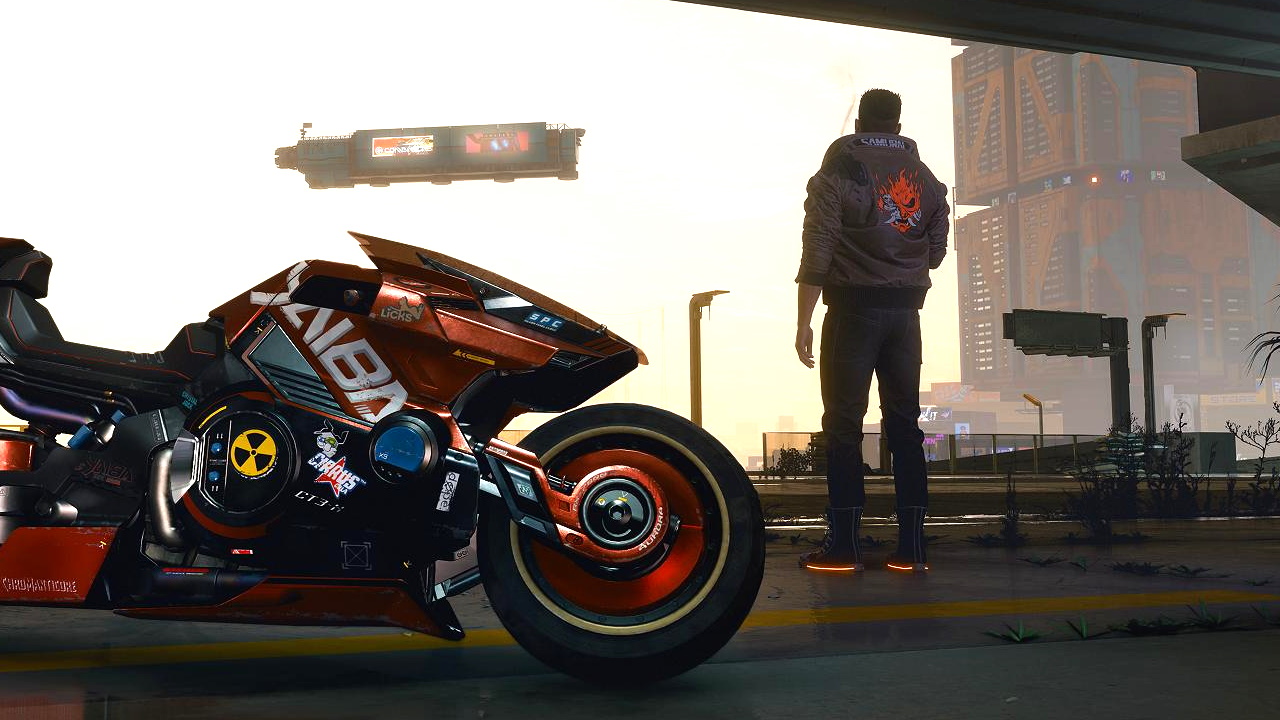
Finally, Akira makes cyberpunk themes more dazzling, including environmental collapse, body transformation, the undercurrent of consciousness, human evolution, artificial intelligence, trust totalitarian, and has become the best role model for film and television entertainment, and video games, some creations are even completely imitated and then modified to their own, which is why some critics always adopt a satirical attitude towards cyberpunk works of today by saying they are owing debt to Akira, as according to Campbell (2018). threads of Akira’s influence can be found in all aspects of popular culture today. For example, like the Japanese animation Ghost in the shell and the Hollywood movie Matrix with many figures of Akira including; complex technology, garbled screens, and the dark fallen world (Campbell, 2017). Furthermore, a new upcoming game Cyberpunk 2077(see the attach) is very enlightened by Akira. For example, in the customization mode, players can change motorcycles outlook into the similar one used by Kaneda in Akira, which is also a tribute to Akira by the production unit (Sheridan, 2019).
How does Dick use the I Ching and how did his views on the oracle and its role in the novel shift over time?
In The Man in the High Castle, Philip K Dick uses the I Ching or The Book of Changes, as an oracle to aid him in the construction of his novel. (Mountfort 2020) The central plot element of the novel is the use of the I Ching by the main characters. Dick’s obsessive consultation of the oracle provided him with answers which then acted as key elements in the writing of the novel. (Mountfort 2020)
Mountfort writes that this helped to set up a powerful metafictional dynamic between the author and his protagonists of the The Man in theHigh Castle. While Philip Dick does in fact use the oracle to help him in his writing, it is mentioned by Mountfort that Paul Williams did an analysis of the most important points in the text where the I Ching was used, and Williams concluded that he did not believe the plot of the novel was gained only through the reading of the I Ching, and that the I Ching was not used throughout the book’s development, but rather only when the characters in the novel used it themselves.
Mountfort (2016) argues that the I Ching provided a philosophical base for the story of the novel, in the, quote : “synchronistic notion of simultaneity” or the “meaningful coincidence” which is contrary to classical western views of causality. He argues that the I Ching does not not merely act as a consultation device for certain points in the plot, but rather, it is a device that actually unifies both the stylistic and the philosophical levels of the novel.
In the end, however, as helpful as the I Ching may have proved to have been for philip Dick, it turned out to be quite the opposite. The oracle suddenly transformed from a helpful guide into this bitter version of an antagonist.
The ending of the novel never truly satisfied Dick, and he wrote that he would have liked to have an ending that was “stronger and better” than the one he had ended up with. He blamed the oracle for it, in fact, believing that it had both misled and betrayed him, giving him an unsatisfying ending to the novel, and that it had done so on purpose.
References
Mountfort , P. (2016) The I Ching and Philip K Dick’s The Man in the High Castle SF-TH Inc
Popular genres have always been excluded from academic literacy in the past as pop genres are not regarded as higher art or literature compared to high prose academic literature and high classical dramas that are valued as privileged status (Nick, 2020). Pop genres such as Comics, science fiction, fantasy novels, and other entertainment works are all regarded as non-serious literature. After all, pop genres are only entertainment for leisure time. Therefore, pop genres have never been mentioned in educational literature, only outside of school or university.
Pop genres have always been criticisms with stereotypical marks. There are five points in the following. First: Pop genres often use formulaic plot structures, which means all story plots, character settings are arranged in order, and the same arrangement pattern is not repeated. Therefore, the audience also anticipates the next plot as expected (Mountfort, 2020). For instance, the protagonist of justice will be the winner, no matter how many difficulties experienced. The best example is the protagonist of the Dragonball series; Son Goku, no matter how many edges of life and death he had been through, he still defeats the evils; even if he is dead, he can still be resurrected, and every time he comes back, his power will break the norm as every audience can expect (Lopez, 2014). Second; Characterisation is often two-dimensional or flat that is a character with little or no complex emotions, motivations, or personalities. Features including; no internal conflict, conform to a stereotype, never experience character development and Lack a multi-faceted personality (Courneen, 2020). For example, Action heroes like Superman and Batman are always young, and middle-aged appearances and strong or immortal physical, and are always upright heroes (Mountfort, 2020). Third, Pop genres are Multi-modal as every creation of work has frequent use of various special effect techniques including; visual, audio, writing materials, and other technical means, which also imply that pop genres are nothing if without multi-modal. Fourth, pop genres are the products of technology development as pop genres represent the technology of the era as each popular creation requires technological equipment (Mountfort, 2020). In other words, pop genres require technology to be produced, and the advancement of technology products are influenced by pop genres. Finally, pop genres are non-realism as they are imaginary creations as purely fictitious (Mountfort, 2020), even though many creations are based on realistic backgrounds, the development of the story plot is always based on the preferences of the audiences. For example, idol romantic dramas are created to match to the taste and fantasy of most audiences, thus misleading many audiences to believe that love is beautiful, somehow forgot the crucial of reality (Paul, 2016).
Even though pop genres have encountered many criticisms and exclusions, but due to the change of the times and the continuous development of humanity, the contents of pop genres have also begun to be introduced into the scope of academic literature. It is significant to look at the elements or contents of pop genres. First, pop genres also follow the social footsteps of the times. Any film and television works have colors that reflect the contemporary society in which traditional literatures do not have (Mountfort, 2020). Second, pop genres have promoted the development of technology (Mountfort, 2020, such as the smartphones we use that changed the way we communicate, the way to enjoy entertainment, and the way to do business or study, which must not be ignored, otherwise will not keep up with the times. Third, every pop genre creation has the seriousness meaning and reflection from the author. For example, Romeo and Juliet by Shakespeare reflects blind hatred and love tragedies in the society we live seem to occur every day, and what we can do is prevent tragedies by taking predecessors as an example to introspect, hoping that there will be good changes, thus the society in the writing of Shakespeare will not need to use the death of beloved to gain consciousness (White, 2016). Finally, Pop genres also represent the cultural gestalt of the country, region, and ethnic group. For example, in addition to showing Japan’s soft power, Japanese animations often have cuteness characters that symbolize Japan’s preference for a warm and harmonious society. They are all worth exploring.
Reference:
Mínguez-López, X. (2014). Folktales and other references in Toriyama’s Dragon Ball. Animation, 9(1), 27-46. DOI: 10.1177/1746847713519386
Mountfort, P. (2020). ENGL602 Popular Genres: Introduction [PowerPoint Slides]. Blackboard. https://blackboard.aut.ac.nz/
White, R. S. (2016). Shakespeare’s cinema of love: A study in genre and influence. Manchester University Press. DOI: 10.7228/manchester/9780719099748.001.0001
What genre or genres is Princess Mononoke? How does it relate to its ‘prequel,’ Nausicaā ?
In terms of genre Princess Mononoke is a jidaigeki, the Japanese term for “era drama”, with many fantasy elements. It takes place in the Japanese Muromachi period and includes depictions of creatures inspired by Japanese mythology, but they are still unique creations from Miyazaki as he was “creating an essentially personal mythology” (Cavallaro, 2006). Within the historical fiction/jidaigeki aspects of the film’s genre, it is important to note that the Muromachi era of Japanese history is one where “in Miyazaki’s view, the fourteenth century is a period of historical transition from a world that was still in close contact with both natural and supernatural forces to a world that would become increasingly oriented toward the human.” (Napier, 2001). In this period of time Miyazaki believes the relationship between humans and nature shifted to one where humans began to shape nature around ourselves and our wants.
It is very early in the film that Miyazaki brings in the fantasy elements and tackles the main theme of the film, nature vs human technology. In Princess Mononoke the conflict is between the people of Irontown and the spirits of the nearby forest. The people of Irontown, in the pursuit of money and use of new industrial technology, are destroying the nearby forest and have angered the gods who dwell within it. Miyazaki’s conflicting love of technology and of nature is featured in most of his works, but none more than Princess Mononoke and Nausicaa of the Valley of the Wind. While is was made before Mononoke, Nausicaa is almost a sequel of the themes shown within Mononoke.
Nausicaa of the Valley of the Wind is a post-apocalyptic fantasy about a post-apocalyptic war world where most of Earth’s eco-system has become toxic and the few human survivors live separated by a toxic jungle swamp called the Sea of Decay. The themes of this story are of environmental destruction and the collapse of civilisation. For Miyazaki, the inclusion of apocalyptic themes in stories about the relationship between us and nature is paramount. It is clear from his works that he fears the impact humans have on the environment and knows that our future generations will have to live with the consequences.
Both Princess Mononoke and Nausicaa of the Valley of the Wind showcase Miyazaki’s belief in the conflict of humanity against nature. Mononoke shows the point in history in which humans began to turn against nature rather working with it, whereas Nausicaa shows us a potential future living with the consequences of out actions.
Reference List:
Cavallaro, D. (2006). Anime Art of Hayao Miyazaki. Jefferson: McFarland & Company, Incorporated Publishers.
Morgan, G. (2015). Creatures in Crisis: Apocalyptic Environmental Visions in Miyazaki’s Nausicaä of the Valley of the Wind and Princess Mononoke. Resilience: A Journal of the Environmental Humanities2(3), 172-183. https://www.muse.jhu.edu/article/614511.
Napier, Susan. Anime: From Akira to Princess Mononoke. New York: Palgrave, 2001.
What was the cultural impact of Akira (1988), and why does it occupy a key place in the canon of anime greats?
Anime began to get increasingly popular in the 1960s and 1970’s it appealed to a large audience especially children because it was entertaining and the animation itself was captivating which is one of the reasons it gained recognition. Later on, the release of Akira an animated Japanese movie made in 1988, directed by Katsuhiro Otomo, had a significant impact in the anime world because of billions of yen being invested to create this film. Akira is set in a post-apocalyptic future after the third world war and Tokyo has become a ‘neo-Tokyo’ where a member of a biker gang has been kidnapped by a secret government agency and his friends try to rescue him.
The opening scene to Akira where the audience sees a bomb explosion this to signify both the Hiroshima and Nagasaki atomic bomb explosion and the media revolution (Bolton 2018) We later see that the explosions we see in the opening scene of the film this was due to Tetsuo who developed telekinetic powers which influenced Akira making her cause the explosion. Another example we see in the film where there is a cultural impact is the scene where we see a crumbling wall with three panels this is to signify the war that was occurring in Serbia where a Japanese critic Ueno Toshiya paid a visit. In Serbia, Akira was seen to a iconic anime because it showed political resistance which was a rare thing for anime movies to do at the time making it occupy an important place in the canon of anime greats.
Akira has also had a significant impact in the world of arts it inspired a lot of animators and it still does today. Before the release of Akira anime was seen to be for children, there hadn’t been a more influential Japanese animated film ever made because of the amount of money and advanced animation technicians used to create this film. Akira was the first film where western audience were infatuated with the story line, artistic Japanese animation and technical work that went in to creating the film. Now many directors and writers cite Akira as an inspiration for their work such being the Duffer brothers who created ‘Stranger Things’ have said ‘the influence of Akira was obviously a big one’ Chu, H. (2018). The Duffer brother were just one of many creators that were influenced by Akira and they probably won’t be the last because even after 32 years of its initial release the film Akira still manages to influence many creators work which makes it so deserving in the canon of anime greats.
In what ways can cosplay be understood in terms of notions such as affect, transportation, transubstantiation and mediated fantasy?
Cosplay is an art of entertainment which combines costume and role play. Participants known as cosplayers will play virtual roles by copying the outfits, the mannerisms and gestures of those particular characters (Mckay, 2019). The term of cosplay was convinced from the Japanese term “Kosupure” by a Japanese animation director Nobuyuki Takahashi (Runnebaum, 2019), who witnessed Western sci-fi costume culture and activities, and brought this popular culture into Japan, making some anime lovers dress up as Japanese anime characters. Since then, Japan has become a place to promote the culture of cosplay.
Cosplay can be interpreted as mediated fantasy. The cosplayers bring themselves into illusory roles from anime or fictional works by acting as virtual characters, transforming themselves into the dreamy and perfect self like anime. Thus, leaving the seemingly ordinary and humble of themselves from reality. This is also called as psychological transportation.
Psychological transportation, in simple terms, is to transform oneself into another character, as Mountfort (2018) said the ability to mimic an animated body and activate virtual characters, and cosplayers will achieve psychological pleasure and satisfaction through cosplay, Just like us need to relieve the stress of life through interests or hobbies. As according to Rahman & Cheung(2012), cosplaying provides performers with a momentary escape from the stresses and monotony of ordinary life; and allows them to enter into a whimsical dream of fantasy.
This is another kind of affective of transformation. The strength of the personality of a cosplayer will be affected by the role he/she plays, that is to put themselves into a specific role, not only the body, but even the personality will be affected by imitation, this is also called an intense corporeal response (Mountford, 2018). For example, a person who tends to be shy, once dressed as an anime character, he/she will be confident and put more efforts to perform in accordance with the level of the role he/she plays. However, this phenomenon is also called Proteus effect, that is cosplay is an asemic medium, the behaviour of the character may become intertwined with a participant self, once that individual exists that role, he/she will take on traits of that role for while, eventually leading to split personality (Lesher, 2017). This is a critique of cosplay is wrong, because there are many controversies, as according to Mountfort (2018) relationships between cosplayers with the source text and the role-playing of popular media avatars are often complex and parodic, in the end, they are merely performers to perform within a certain range. Proteus effect is wrong towards cosplay because ordinary people like us grow up through the influence of the surrounding environment to produce some kind of personalities, but ordinary people do not have the hobby of cosplay.
Finally, cosplay is an emotional and spiritual feeling. Fans of anime love to see the virtual characters to be realized in realistic forms by the cosplayers. For example, the traits of cool, hot, sexy, and cute in the animation are realized or activated. Because of the enthusiasm of fans, cosplayers are highly valued like celebrities, and it also gives cosplayers greater confidence and energy to promote cosplay culture (Rahman & Cheung, 2012). For participants, fictional characters also have personality and emotions, which are self-projection. Therefore, cosplayers are knowledgeable about the characters based on their own experience and regard the characters as their peers. Cosplayers do not play cosplay for being unique, but their love and passion of anime and their ability to improve their self-concept via cosplay, it can be said as the process which they build their self-image.
Q. According to Mountfort et al. (2018), what are the three main genres of cosphotography, and how did they historically develop?
Cosplay photography, or cosphotography, refers more to the subject matter of the cosplay which is being photographed rather than any specific type of genre. In cosphotography, the cosplay itself is the subject of what is being photographed.
Just as other “types of photographers”, cosplay photographers can also range from occasional hobbyists to full-time professionals. Although this is a bit rare, some cosplay photographers are even paid to cover grand cosplay events such as comic conventions, to take photos for posters, and to collaborate with cosplayers to publish books.
While cosphotography might not in itself be a particular form of a genre, specific genres within cosphotography, however, do exist.
According to Mountfort et al. (2018), there are three main genres of cosphotography:
Runway: Glossy and glam, this is a style of cosplay photos one would associate with fashion magazines. The emphasis on these types of shots is to capture the cosplay character in the most flattering way. These shots require quite a lot of planning and preparation, often months in advance. Props might be introduced into the photos to embellish the final product.
This style also requires a bit of post-processing. Often camera shots do not come out looking the way one would want them to look, so some edits are done to make the picture look as perfect as possible, these may include tweaking exposure and setting saturation, adding special effects or retouching.
2. Hallway: The hallway shot is a common type of a cosphotographic shot. The photograph is shot in a relaxed, almost formal style, so it appears as if the photographer just happened to come across a particularly interesting cosplay by chance and captured it with a quick snapshot. The result of the photo is such that it appears fun and spontaneous, and reflects the cosplayer’s excitement of the cosplay event.
3. Studio Portrait: Casual portrait shots focus all of the camera’s attentions on the cosplayer, and the attempt here is to try to capture the true “essence” of the character being portrayed by the cosplayer, an element that can often end up blending in with the background in quick snapshots.
Portrait shots are not spontaneous. They require good planning and communication. When capturing a studio portrait, it is the photographer’s job to make sure the cosplayer is “isolated” in the shot, i.e, there is no busy or distracting background in the photo which might result in attention being driven away from the cosplayer and the character he/she is portraying. The studio portrait photographer must be somewhat familiar with the character, as then they can look for shooting locations they know will suit the character, as the right location enhances the character’s story.
Costuming in early Worldcons provided important models that later became adapted into cosplay Mountfort et al. (2018). Costumes would go on to be showcased in two major convention settings.
The first was in formally staged costume competition. These originated in annual Masquerades – fancy dress balls- , and the second was in more informal spaces for conventions. These eventually led to the term “hallway” costumes. These two convention settings (formal and informal) gave rise to the emergence of two photographic cosplay genres: the competition “runway” shoots and the hallway snapshots.
By the 1970s, a third photographic genre had emerged, that of the studio portraits. Back then, these types of shots were generally staged at convention centers rather than in proper photographic studios. These shots resemble fashion studio-style photographs. In early examples of studio shots, portraits were kept large and props were kept few. Nowadays, though, more props are often introduced, and the use of a blue screen is utilized, to get a clearer and a better image quality.
References:
Mountfort, P. Pierson, Smith, A. Geczy, A. (2018) Planet Cosplay Intellect Books.
The topic chosen is about how the monsters in horror genre differentiate from the monsters of other genres. First of all, monsters are non-human creatures. Except for their weird looks, their behaviours are very different from humans. In popular culture, monsters can be divided into many types, innate, created by humans, and transformed by humans. Of course, usually monsters act as villain roles against humans.
Before discussing the subject, it is significant to understand the difference between the horror genre and other genres. The horror genre is to scare the audiences by using dark, weird and cruel visual effects. It uses the worst imagination of human as a vehicle to terrorize by giving audiences the rush of adrenaline(Toomer, 2019). Other genres (let’s say adventure or dark fantasy) on the other hand, is based on heroism and uses action and adventure to make the audience climax and excited, as according to Toomer (2019), adventure and dark fantasy serve as the alternative to audiences wanting a gloomier, foreboding experience without the threat of imminent death or gruesome imagery.
Horror monsters and dark fantasy monsters share many common elements, for example; other than scary appearances, they are always set in the world stage of illusion or science fiction such as bleak unforgiving worlds, high-tech world, alien world, and the world after destruction. However, they do not refer to each other, which means that the only difference between them is that adventure and dark fantasy do not have the label of horror (Toomer, 2019). For example, monsters in the live-action genre “Mighty Morphin Power Rangers, their appearances can be scary, but after all, they are merely consumables for heroes, sometimes even funny. Another example is the Venom, a supervillain from Spiderman series. His horrible appearance is not under the alien created by a Swiss artist H.R Giger. But unlike the alien, the Venom always shows his evil side by fighting or torturing the hero.
To differentiate horror monsters and other genre monsters, one must look at the degree of performance which can be divided into three general elements; uncertainty, the number of appearances and cruelty. Uncertainty; is the one that makes the horror monsters so frightening, because as Ebiri (2020) mentioned, we cannot grasp where the monster might come from or cannot predict their behaviours. For example, the alien known as xenomorph always attacks humans in weird ways and sudden patterns, making the audience suddenly frightened. The number of appearances means horror monsters do not appear many times, and the audience has never had a chance to take a good look of the whole figure of the monster. Because they increase the mystery by hiding, classic scary monsters such as aliens, predator, Freddy, IT-the pennywise and other ghost creatures like conjuring and the ring. As Ebiri (2020) emphasized if revealing the number of appearances of the monster will decline the horror effect of the monster. The cruelty; is the most obvious view to distinguish horror monsters by looking the way of the monster to hunt humans. For instance, horror monsters always attack or kill human victims with brutal ways like blood, severed limbs, and eat alive etc to make horror atmosphere to reach a bloody effect. Famous horror monsters like chainsaw massacre, Jason, Freddy, predator and other monsters from zombies category like resident evil, once the human victims locked by them are often killed horribly (Scott, 2020).
Finally, monsters in horror genres present the fragile side of human beings in reality, whether physically or spiritually, people are always unable to resist the coming of death. The human ability is helpless and useless, once humans are dragged into the doom, the pain endure is not only pain but a sad one profoundly (Owen, 2018). Generally, horror monsters are like disasters in reality, like natural disasters and economic storms that brought incomparable grief to mankind. Nevertheless, Human beings are still intriguing and killing each other, which are also a common plot in horror movies.
In what ways can cosplay be understood in terms of notions such as affect, transportation, transubstantiation and mediated fantasy?
The word “cosplay” was coined in the eighties to describe the activity of “costume role-play” (Mountfort et al, 2018). On its most basic level, this involves dressing up as a character then pretending to be them.
Although cosplaying began in America at sci-fi conventions, it was in Japan where it really took off and developed into a major subculture. It is no surprise many costumes worn by cosplayers are from Japanese characters, most notably from anime, manga and video games (Mountfort et al, 2018).
Once a cosplayer dons their costume, they adopt the personalities of the characters they are portraying. In this way they are actors, they are performers, and when a camera is pointed at them, they are models. Those who make their own costumes could be regarded as fashion designers, tailors, painters or even sculptors.
Cosplayers commonly reference their chosen source texts, regarded as a form of citation which can be either ‘direct imitation’ and ‘textual transformations.’ The former a faithful representation of the parent text and the latter is a contrast, fidelity (Mountfort et al, 2018).
Beyond the social dimension of meeting new people and making friends, cosplayers who don a costume can forget about their regular lives and become someone else, if only for a day. They can transform into someone powerful and exciting, sexy and alluring or just cute and quirky. No matter what the attributes of the character they are playing, the process of adopting an alter-ego is described as mediated fantasy.
The translation of such archetypal figures onto actual bodies becomes a kind of
transubstantiation, in that Domsch suggests that ‘the “thing” that can be transported from one medium to another’ is the ‘mental construct that we call a narrative storyworld and its existents (Mountfort et al, 2018).
This transportation of a particular sense of attaching intensities of feeling to fictional characters, leading to a desire to transcend mere reading and watching, can be described as an affect, the term referring here not just to the feelings provoked by cosplay but an intense corporeal response (Mountfort et al, 2018).
Those who are shy can tap into the strength of their character and completely come out of their shell. The simple act of wearing a costume can infuse the cosplayer with a level of energy and confidence which is greatly empowering.
Plenty of cosplayers are not shy, extraverted and cosplay gives them the perfect excuse to let their true selves come to the surface. Although they may be confident and charismatic before they don their costume, cosplaying allows them the freedom to take their passions to a greater level of self-expression.
Cosplaying can also make a person feel special. Dressing up in a stunning costume and having crowds of admirers showering them with compliments has obvious appeal. The encircling photographers and eager fans can make cosplayers feel like celebrities.
REFERENCES
Mountfort, P., Peirson-Smith, A., & Geczy, A. (2018). Planet cosplay: Costume play, identity and global fandom. Intellect Bristol,UK/Chicago, USA
 Pop Genres 2020